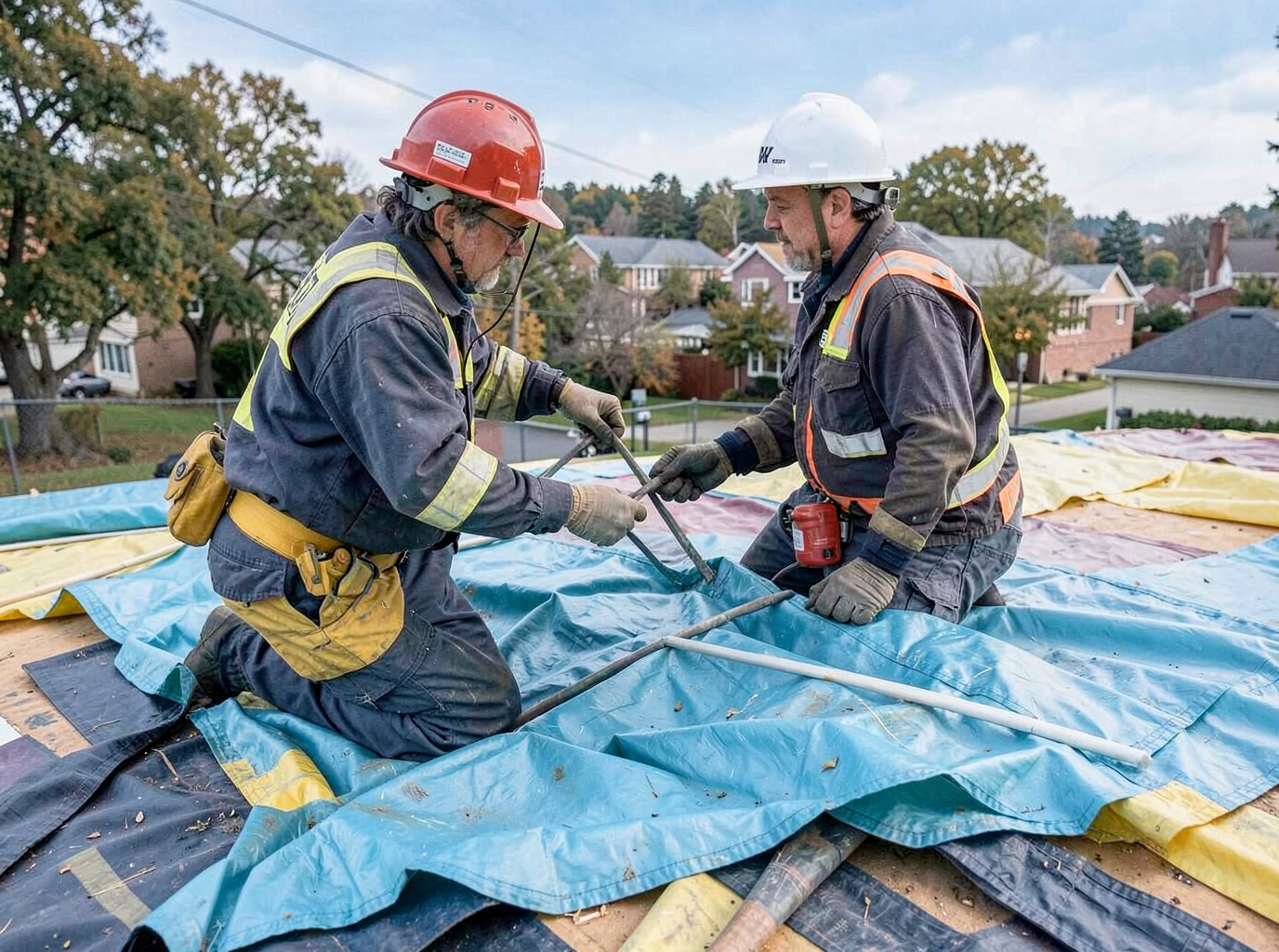
Logan winters bring heavy snow loads and rapid freeze-thaw cycles that crack asphalt shingles and lift flashing around chimneys and valleys. When a leak appears during one of these events, tarping buys time until conditions allow proper replacement. We use reinforced polyethylene tarps rated for high winds common along the Bear River corridor and secure them with furring strips and screws into rafters rather than relying on bungee cords that fail in gusts.
Homes in Downtown Logan and Hillcrest often date to the 1920s-1950s with steep pitches and multiple layers of existing roofing. These older builds require careful placement of tarps to avoid trapping meltwater under eaves. We check attic ventilation and insulation depth first because trapped moisture in Cache County’s dry but cold air can lead to hidden mold within days. Tarps are cut to overlap at least three feet past the damage and sealed at seams with compatible tape rated for below-freezing temperatures.
North Logan and Smithfield properties sit on slightly higher ground with more exposure to afternoon sun, which can cause ice dams to shift overnight. Our crews carry extra ballast weights for these sites and inspect for existing soft spots in decking before stepping on the roof. Every tarp job includes a follow-up visit within 72 hours to check tension after the next weather front moves through.
We never leave tarps in place longer than needed because UV exposure and wind eventually degrade even heavy material. Homeowners receive clear written guidance on monitoring the tarp edges and what signs mean it is time to schedule the permanent fix.
Technician insight
In Logan the thing that catches most people out with Emergency Roof Tarping is underestimating how quickly meltwater backs up under older layered shingles on homes in Downtown Logan once daytime temperatures climb above freezing. The valley’s cold semi-arid winters create ice dams that push water under flashing faster than people expect, and a tarp that is only tacked at the edges will lift in the afternoon winds that funnel through the narrows.
Hillcrest Ice Dam Leak
A homeowner in Hillcrest noticed water staining near a second-story ceiling after a warm spell following heavy snow. We found the leak originating at a valley where an ice dam had formed. We installed a reinforced tarp extending past the valley and secured it with battens screwed into rafters. The interior stayed dry through the next freeze-thaw cycle until permanent valley repair could be scheduled.
Emergency Roof Tarping Services We Offer
✓Storm Damage Tarping
Immediate covering of wind-lifted shingles or hail punctures common after Cache County thunderstorms to prevent interior water intrusion.
✓Ice Dam Tarping
Strategic placement of tarps over ice dam locations along eaves in Hillcrest and Bridgerland neighborhoods to redirect meltwater away from living spaces.
✓Chimney Flashing Tarping
Targeted tarping around failed step flashing at chimneys on older Downtown Logan homes where mortar joints have deteriorated from repeated freeze cycles.
✓Valley Leak Tarping
Covering compromised open valleys on homes near Utah State University where debris accumulation accelerates shingle wear during snowy winters.
✓Skylight Emergency Tarping
Rapid sealing of cracked or displaced skylights on Bridgerland properties before additional snow load causes frame failure.
Emergency Roof Tarping Cost in Logan, UT
| Service | Typical Range | What Affects It |
|---|---|---|
| Small section tarp (under 100 sq ft) | $250–$450 | Single-story homes with easy ladder access in Hillcrest |
| Standard roof section tarp | $450–$750 | Two-story homes or moderate pitch in Downtown Logan |
| Large or multi-area tarping | $750–$1,200 | Steep roofs or multiple leak zones near Utah State University |
| Ice dam or valley extension | $150–$300 | Added length required due to snow load patterns |
Ranges are typical for Logan, UT and confirmed with an exact written quote before any work starts.
How it works
- 1
Initial Assessment
We inspect the roof from the ground and attic to locate active leak points and assess safe access on snow-covered surfaces.
- 2
Tarp Sizing and Placement
Tarps are measured and positioned to extend well beyond the damaged area, accounting for wind direction typical in the Cache Valley.
- 3
Secure Attachment
We fasten the tarp using wood battens screwed into rafters and add ballast where roof pitch or exposure requires it.
- 4
Documentation and Follow-Up
Photos are taken for insurance and a return visit is scheduled to monitor the tarp after the next weather system.
Pricing
Most emergency tarping jobs in Logan fall between a few hundred dollars and just over a thousand depending on roof access and size of the affected section.