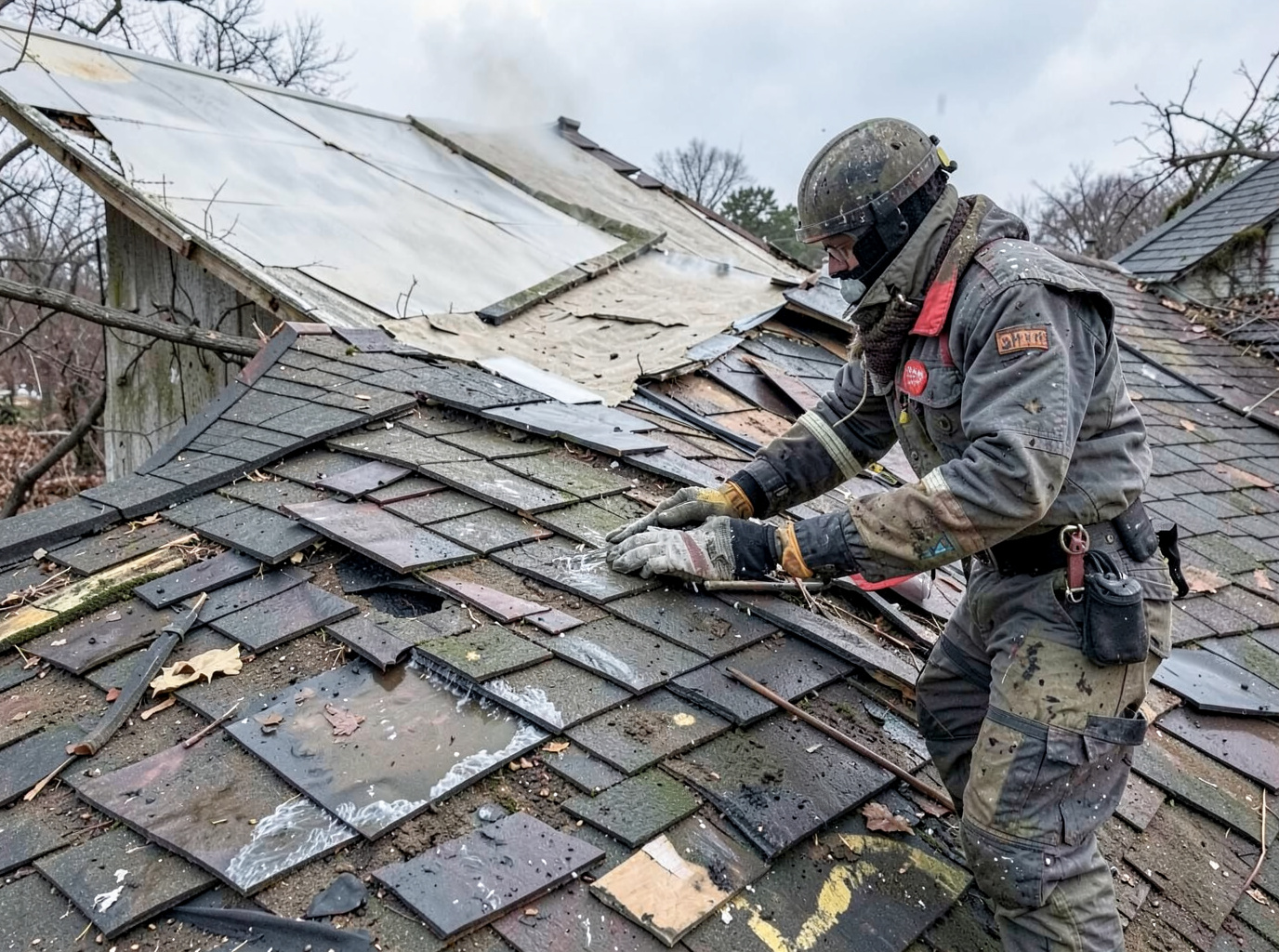
Logan’s cold semi-arid climate brings repeated freeze-thaw cycles that turn small hail or wind tears into active leaks once snow melts. Older homes in Downtown Logan and Hillcrest often carry original asphalt shingles or wood shakes that have already lost flexibility, so impact damage spreads farther under the next heavy snow load. Crews working near Utah State University routinely find that tree branches from mature maples land on low-slope sections and crack the underlayment without visible exterior signs until water reaches the attic.
Wind events common along the east bench of Cache County lift shingles at the north-facing eaves first because those slopes take the brunt of canyon gusts. When we open the roof deck on Bridgerland properties we frequently discover that the original felt has dried out and no longer seals around nail holes, allowing meltwater to travel laterally under the remaining shingles. Ice dams form fastest on the shaded north slopes of homes in north Logan and Smithfield; the resulting water backs up under the shingles and soaks the sheathing before homeowners notice interior stains.
We always pull permits when structural decking must be replaced because Cache County inspectors check for proper ice-and-water shield coverage on the lower six feet of every slope. Metal drip edge is required on all eaves in these valleys to prevent wind-driven snow from wicking under the starter course. Homeowners in the area learn quickly that skipping the shield layer on older homes leads to repeated callbacks after the first spring thaw.
Technician insight
In Logan the thing that catches most people out with Storm Damage Roof Repair is the dried-out original felt on 1970s and 1980s homes in Hillcrest; once wind or hail opens a path, meltwater travels under the remaining shingles all the way to the ridge because the felt no longer seals around the nails.
Wind damage on a Hillcrest split-level
Heavy canyon gusts lifted shingles along the north eave of a 1984 split-level in Hillcrest. We found the original felt had cracked at every nail line and water had already reached the living-room ceiling. New ice-and-water shield was installed across the lower eight feet, damaged shingles were replaced to match, and the homeowner reported no further leaks after the next snow melt.
Storm Damage Roof Repair Services We Offer
✓Hail Damage Assessment
Detailed inspection of impact bruising on shingles and underlayment after Cache County hail events, with photos for insurance documentation.
✓Wind-Lifted Shingle Replacement
Re-securing or replacing shingles torn by canyon gusts common on north-facing slopes in Hillcrest and Bridgerland.
✓Ice Dam Leak Repair
Removal of ice dams and installation of additional ice-and-water shield on homes in Downtown Logan and north Logan to stop meltwater intrusion.
✓Tree Impact Roof Repair
Deck inspection and shingle replacement after branches from mature trees near Logan Tabernacle or Utah State University fall during storms.
✓Emergency Tarping Service
Same-day temporary tarping on active leaks in Smithfield and surrounding Cache County neighborhoods until permanent repairs can be scheduled.
✓Snow Load Deck Reinforcement
Sistering rafters and adding collar ties on older Hillcrest homes where heavy snow accumulation has caused visible sagging.
Storm Damage Roof Repair Cost in Logan, UT
| Service | Typical Range | What Affects It |
|---|---|---|
| Emergency tarping | $250–$650 | Size of damaged area and roof height |
| Hail impact repair (one slope) | $1,200–$2,800 | Number of damaged squares and underlayment condition |
| Ice dam section repair | $800–$1,900 | Linear feet of eave and whether decking must be replaced |
| Tree limb damage repair | $950–$2,400 | Deck replacement needed and disposal of large branches |
| Full slope wind damage | $1,600–$3,500 | Age of existing shingles and access on two-story homes |
Ranges are typical for Logan, UT and confirmed with an exact written quote before any work starts.
How it works
- 1
Initial Inspection
We walk the roof and attic in the affected neighborhood, noting hail bruises, lifted shingles, and any prior ice dam staining.
- 2
Damage Documentation
Photos and measurements are taken for insurance and to determine exact material needs for the specific home age and slope.
- 3
Temporary Protection
Tarps or quick patches are installed if active leaking threatens interior finishes before permanent work begins.
- 4
Permanent Repair
Damaged sections are removed, decking is replaced where needed, and new underlayment plus shingles are installed to match existing.
- 5
Final Walkthrough
Homeowner inspects the completed work from both roof and attic to confirm all storm damage has been addressed.
Pricing
Upfront written quotes after on-site inspection; final price depends on extent of deck damage and access.