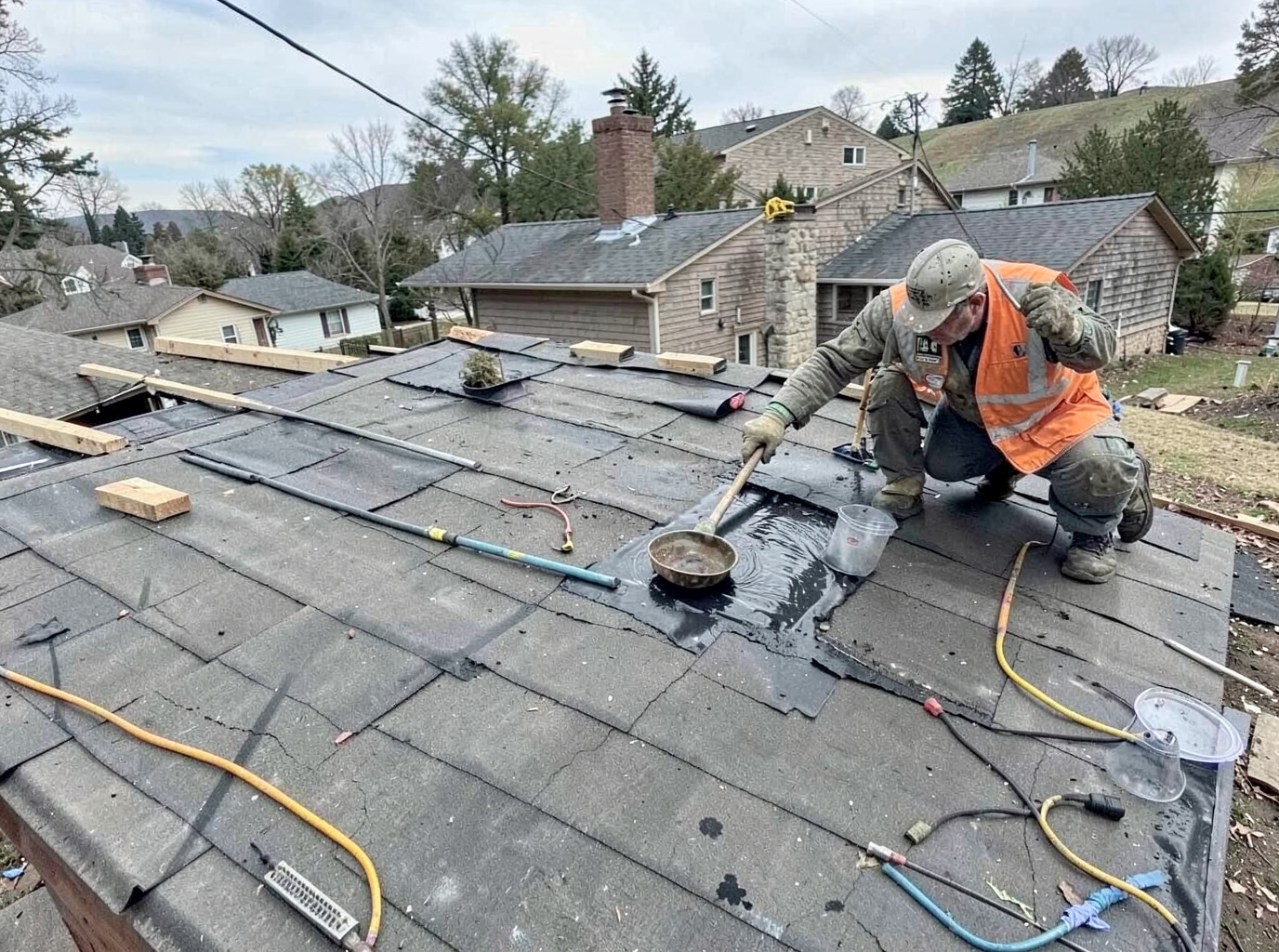
Flat and low-slope roofs in Downtown Logan and older Hillcrest homes often use modified bitumen or single-ply membranes that fail at seams when repeated freeze-thaw cycles from Cache County's cold semi-arid winters force ice under laps. Snow drifting against parapets near Utah State University adds extra weight and moisture that standard shingle roofs never see. Technicians check for ponding at internal drains first because clogged scuppers on low-slope sections in Bridgerland send water under the membrane within hours of a melt.
Edge details around Logan Tabernacle and Cache Valley Center for the Arts style buildings require counter-flashing that matches existing masonry to avoid code violations during repairs. Homeowners in north Logan and Smithfield frequently discover leaks only after water migrates along ceiling joists because the low pitch prevents rapid shedding. Proper repair means lifting the membrane, drying the insulation, and installing new termination bars rather than relying on surface caulk that cracks again the next winter.
Terrain in the valley creates micro-climates where afternoon sun melts snow on south-facing low-slope sections while shaded north sides stay frozen, producing constant drip paths at penetrations. Crews carry extra rolls of matching membrane because older stock in Bridgerland rarely matches current TPO formulations, and mismatched patches fail faster under snow load.
Technician insight
In Logan, the thing that catches most people out with Flat / Low-Slope Roof Leak Repair is how snow drifts against parapets in Bridgerland push water under seams that look solid from the ground; older modified bitumen roofs in Hillcrest fail fastest because the original felt layers absorb meltwater and never dry.
Hillcrest Low-Slope Leak After Early Melt
Water appeared in a second-floor ceiling after a January thaw. Inspection showed a clogged scupper and separated seam where drifted snow had sat against the parapet. The crew cleared the drain, dried the insulation, and heat-welded a new 8-foot seam section with fresh termination bar.
Flat / Low-Slope Roof Leak Repair Services We Offer
✓Membrane Seam Repair
Heat-weld or adhesive reseal of failed laps on EPDM and TPO roofs to stop water entry from snow melt in Cache County winters.
✓Drain and Scupper Clearing
Removal of debris and ice from internal drains on flat roofs in Downtown Logan to prevent ponding and subsequent membrane failure.
✓Parapet Flashing Replacement
Installation of new counter-flashing and termination bars on low-slope edges common to Hillcrest and Bridgerland buildings.
✓Penetration Boot Replacement
Replacement of deteriorated pipe boots and vent flashings that leak first under repeated freeze-thaw cycles near Utah State University.
✓Ponding Area Correction
Addition of tapered insulation or crickets to redirect water on flat sections in north Logan and Smithfield homes.
Flat / Low-Slope Roof Leak Repair Cost in Logan, UT
| Service | Typical Range | What Affects It |
|---|---|---|
| Initial Roof Inspection | $150–$300 | Includes moisture scan; higher for multi-story buildings in Downtown Logan. |
| Small Seam or Patch Repair | $400–$850 | Single area under 50 sq ft; increases with membrane age. |
| Drain or Scupper Service | $250–$500 | Includes clearing and new strainer; ice removal adds cost in winter. |
| Parapet Flashing Section | $600–$1,200 | Per 10 linear feet; masonry tie-in required on older Hillcrest homes. |
Ranges are typical for Logan, UT and confirmed with an exact written quote before any work starts.
How it works
- 1
Site Assessment
Inspect membrane condition, seams, drains, and snow-load indicators from the roof surface in the specific neighborhood.
- 2
Moisture Mapping
Use infrared scanning to locate wet insulation beneath the membrane without unnecessary demolition.
- 3
Targeted Repair
Lift membrane, dry or replace insulation, weld new seams, and reinstall termination details.
- 4
Final Water Test
Flood test repaired sections and confirm drainage before leaving the site.
Pricing
Upfront quote after on-site inspection; price varies by roof size, membrane type, and extent of wet insulation.